
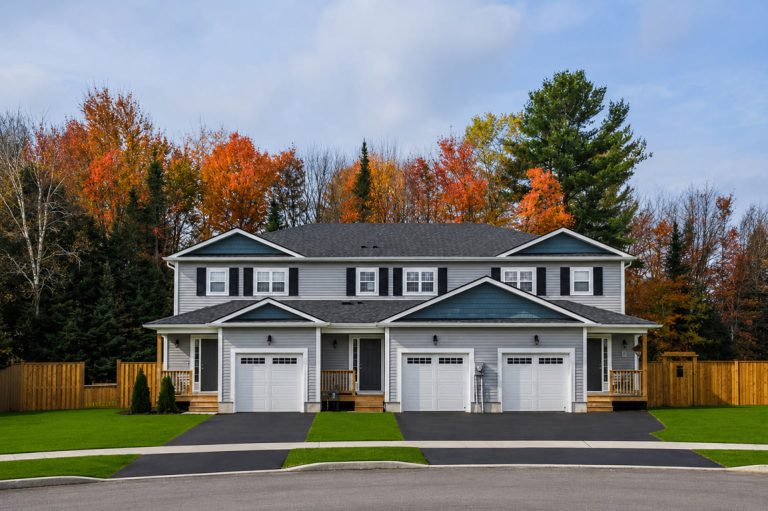
More Ontario buyers are walking away from condo deals and looking seriously at freehold homes. It is not just a trend. It reflects a shift in how people think about ownership, control, and long-term value. If you are comparing your options right now, this guide breaks down what actually separates freehold from condo ownership so you can make a confident, informed decision.
What Does Freehold Ownership Actually Mean?
Freehold ownership means you own the home and the land it sits on, outright. There are no monthly maintenance fees paid to a corporation, no board votes required to paint your front door, and no shared ownership of common spaces. What you buy is yours.
In Ontario, freehold properties include detached homes, semi-detached homes, and freehold townhomes. The key word is freehold. A freehold townhome is structurally attached to neighbouring units but is owned independently with no condo corporation involvement. This is a detail many first-time buyers miss when comparing options.
How Is a Condo Different Beyond Just the Building Type?
A condo is a form of legal ownership, not just a building style. When you buy a condo, you own your unit and a share of the common elements. A condo corporation manages the shared spaces, sets the rules, and collects monthly maintenance fees to cover those costs.
Those fees are not optional and they do not disappear over time. In Ontario, condo fees have risen steadily over the past decade. For many buyers, fees of $400 to $700 per month on top of a mortgage are standard in urban markets. That monthly cost does not build equity. It covers upkeep of spaces you share with dozens or hundreds of other residents.
The Real Cost Difference Most Buyers Overlook
When buyers compare a condo listing to a freehold home, they often focus on the purchase price alone. This is where the numbers get misleading.
A condo priced at $420,000 with a $550 monthly maintenance fee adds up to $6,600 per year in fees. Over ten years, that is $66,000 spent on ownership costs that build no equity and cannot be recovered when you sell. A freehold home at a similar or slightly higher price carries no such obligation.
There is also the special assessment risk. Condo corporations can levy unexpected charges on unit owners when reserve funds fall short. These assessments can run into the thousands with little warning. Freehold owners carry no such exposure. Repairs and upgrades are your decision, on your timeline, on your budget.
Who Is Buying Freehold Homes in Ontario Right Now?
The shift toward freehold is visible across multiple buyer types. Young professionals who delayed buying during peak urban pricing are now looking at smaller Ontario communities where freehold homes are genuinely within reach. Families who need more space and a yard are leaving condo towers behind. And buyers approaching retirement are selling larger properties and right-sizing into well-built freehold townhomes that offer lower maintenance without the fee structure of condo living.
What connects all three groups is a common priority: real ownership. Not a unit in a building managed by a corporation. A home where the decisions belong to the person who holds the title.
This shift is exactly why communities like Markdale Meadows and Gates of Meaford are drawing serious interest from buyers across Ontario. Freehold townhomes starting from the mid $300,000s give buyers a genuine path into ownership without the ongoing cost drag of condo fees.
Does Location Change the Math on Freehold vs. Condo?
Significantly. In the Greater Toronto Area, freehold detached homes remain out of reach for most buyers at current price levels. That gap has pushed many buyers toward condos by default. But Ontario is a large province, and that urban pricing does not apply everywhere.
In communities across Grey County, South Georgian Bay, and Muskoka, freehold homes are available at price points that are genuinely attainable for two-income households. The lifestyle trade-off is smaller than many buyers expect. Towns like Meaford, Gravenhurst, and Bracebridge offer strong local amenities, natural surroundings, and increasingly strong connectivity for remote and hybrid workers.
Kestrel Glen in Gravenhurst sits minutes from Lake Muskoka and the town core. Our Bracebridge community offers the same freehold ownership model in one of Muskoka’s most established towns. For buyers doing the math honestly, the location shift often makes more financial sense than staying in a condo market where fees keep climbing.
What Freehold Ownership Means for Long-Term Value
Freehold properties in Ontario have historically held and grown value more consistently than condos over longer time horizons. There are a few structural reasons for this.
Land is finite. When you own land, you own something that cannot be replicated. Condo values are tied not just to market conditions but to the health of the corporation, the age of the building, and the reserve fund status. A building with deferred maintenance or a poorly managed corporation can drag unit values down regardless of broader market conditions.
Freehold homes also offer more flexibility. You can renovate, expand, or modify based on your needs and preferences. That flexibility has practical value over a 10 to 20 year ownership horizon that a condo structure simply cannot match.
Common Misconceptions About Freehold Townhomes
Many buyers assume that freehold townhomes come with condo-style restrictions simply
because they share walls with neighbours. This is not accurate.
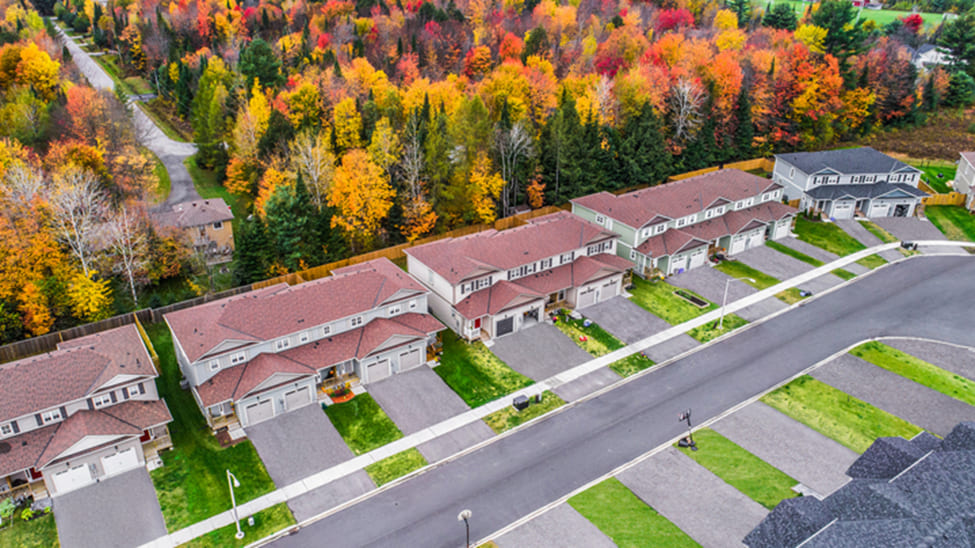
A freehold townhome has no condo corporation. There are no monthly fees paid to a management company. There are no rules about window treatments or rental restrictions imposed by a board. Some freehold townhome communities do have road maintenance agreements or shared lane agreements for private roads, but these are far less restrictive and far less costly than condo fee structures.
It is worth asking your builder and your lawyer to confirm the ownership structure clearly before you sign. At LC Development Group, the freehold townhomes offered across our communities are structured so buyers own their home and their lot without condo corporation involvement. That distinction matters and we are transparent about it from day one.
Is a Freehold Home the Right Choice for You?
Freehold ownership is the stronger long-term choice for buyers who want full control, no recurring fee obligations, and a home that is genuinely theirs. It suits buyers at multiple life stages, from first purchases to family upgrades to retirement right-sizing.
Condo ownership still makes sense for specific situations: buyers who want a lock-and-leave lifestyle, those who need to be in a specific urban area, or buyers who are not ready for any home maintenance responsibility. But for the majority of Ontario buyers who are weighing the numbers carefully, freehold consistently comes out ahead when you factor in total cost of ownership over time.
If attainable freehold ownership in Ontario is your goal, exploring what is available outside the GTA is one of the smartest moves you can make right now. Our current communities are built with exactly that buyer in mind.
Frequently Asked Questions
Is a freehold townhome really different from a condo townhome?
Yes, the difference is significant. A freehold townhome means you own the unit and the land it sits on with no condo corporation. A condo townhome involves shared ownership of common elements and monthly maintenance fees paid to a condo corporation, even if the building looks identical from the outside.
Can freehold townhomes have any fees at all?
Some freehold townhome developments include a road maintenance agreement if the internal roads are privately owned. These fees are typically much lower than condo maintenance fees and cover a narrower scope. Always review this with your lawyer before purchasing.
Are freehold homes harder to qualify for than condos?
Not necessarily. The mortgage qualification process is the same. The difference is that condo buyers sometimes use lower purchase prices to qualify, but ongoing fees reduce actual monthly affordability. A freehold home at a slightly higher price with no fees often results in better overall financial positioning.
Why are freehold homes more attainable in smaller Ontario communities?
Land and construction costs are lower outside major urban centres, which allows builders to price freehold homes at levels that two-income households can realistically reach. Markets like Markdale, Meaford, Gravenhurst, and Bracebridge offer this combination of true freehold ownership and attainable pricing that is simply not available in the GTA.
What should I ask a builder before buying a freehold townhome?
Ask whether there is a condo corporation involved, whether there is a road maintenance or shared lane agreement, what the Tarion warranty covers, and whether the builder has a track record of completed projects. Reviewing past projects and the builder’s warranty commitment
are good starting points for any serious buyer.
Building the Right Foundation Starts With the Right Ownership Model
Choosing between freehold and condo is not just a lifestyle decision. It is a financial one that shapes your equity, your monthly costs, and your long-term flexibility for years ahead. For Ontario buyers who want real ownership without the ongoing cost structure of condo living,
freehold remains the stronger path.
At LC Development Group, we build freehold townhomes and single detached homes in communities across Ontario, including Markdale, Meaford, Gravenhurst, and Bracebridge. Our focus is on quality craftsmanship and attainable ownership, because we believe that owning a home you are proud of should be a real possibility, not a compromise. Get in touch with us on our website for more information.